![National Association of Travel Agents Singapore [NATAS] |](https://blogger.googleusercontent.com/img/b/R29vZ2xl/AVvXsEiw9HI4uL026U-B8Kz1WHPyqJeQ-U2kZK1uyMTzf89X9WQD54ucW6UjHIyIJc6dDlzsH1Y_JhTTv0_v4aYDemuzyff1SxrdOHJl26LEcrpq8MiO5_7Oc8sSE_nsIwGBeEuZyM0jsB3rjUE/s1600/sub_header.jpg)

Article contributed by New Shan Travel
Mention the Balkans and a sense of mystery
prevails. This off-beaten tourist destination, located in the south eastern
part of Europe, is slowly attracting visitors looking for something different.
Flanked by the Balkan Mountains, hence its name, each of the countries in the
Balkan Peninsula exudes its own personality and charm.
Podgorica, Montenegro – Our arrival at the Crne Gore International Airport in Podgorica, capital of Montenego marked the start of our 7-day Balkans tour. We were met at the airport by our English speaking driver cum assistant and were whisked off to lunch at a local restaurant, where we had a first taste of traditional Podgorica cuisine. After a satisfying lunch, we headed off on our city tour. Podgorica, of which the name originated in 1326, is the official commercial and cultural city of Montenegro. The city was built around five rivers, Zeta, Moraca, Ribnica, Cijevna and Sitnica. As most of the city was destroyed during World War II, Podgorica is a relatively new city with modern buildings and parks.


Kotor, Montenegro – Kotor, with its medieval architecture and numerous monuments of cultural heritage, is a UNESCO World Natural and Historical Heritage Site. It is located along one of Montenegro's most beautiful bays and is known as a city of traders and famous sailors. There are many well preserved buildings from the Middle Ages that were built between the 12th and 14th century.


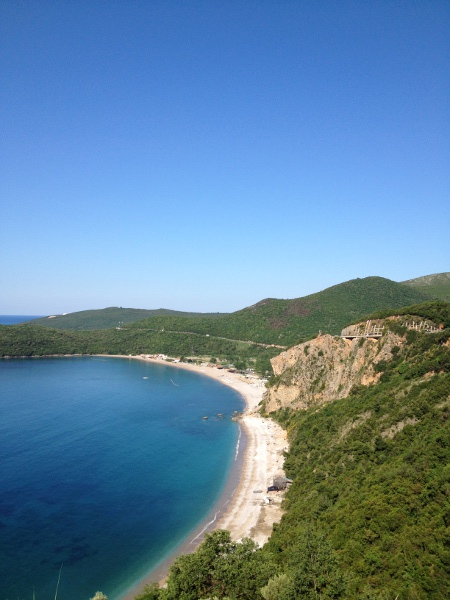
Budva, Montenegro – Budva is a coastal town in Montenegro. The coastal area around Budva, called the Budvanska rivijera, is the centre of Montenegro's tourism, and is well known for its sandy beaches and diverse nightlife. Budva is 3,500 years old, making it one of the oldest settlements on the Adriatic sea coast. Much of the architecture in the Old Town is of Venetian design.
Shkodra, Albania – After exploring Montenegro, we crossed the border over to Shkodra, a city located on the Lake of Shkoder in north western Albania. The only known Illyrian capital in the world, Shkoder was founded around the 4th century BC and is a significant cultural and economic centre today. Besides being one of the oldest and most historic towns in Albania, it is also the gateway to the Albanian Alps. Lunch was an exquisite affair, as we sampled traditional cuisine and downed it with Albanian Raki in a tastefully decorated restaurant.


Tirana, Albania – Tirana is the capital of Albania. It was founded in 1614 by Suleyman Pasha Bargjini, who built the first buildings that formed the nucleus of the new town: a mosque, a hammam, and a bakery, at the place where today stands the monument of the Unknown Partisan (Partizani i Panjohur). Important buildings in Tirana include the Palace of Congresses, the International Centre of Culture, the Palace of Culture, the Theatre of Opera and Ballet and the Sky Tower, etc. Our visit also included a tour of the famous Et'hem Beu mosque in Tirana and while in Tirana, we had the privilege of dining at the most prestigious restaurant.


Kruja, Albania – The significance of Kruja is related to the Albanian national hero, Gjergj Kastrioti (Skanderbeg), who fought against the invading Ottomans in the 15th century. Kruja was Skanderbeg’s capital and its castle turned into an invincible stronghold of resistance against the Ottoman threat, thus becoming famous in Europe. Kruja town lies on the side of the Kruja Mountain, about 600m above sea level, commanding a panoramic view of the Adriatic Sea. Visit the citadel of Kruja and the Museu Etnograflk, which is a preserved house. The interesting museum shows how the ancient Albanian lived.


Durres, Albania – Durres is home to Albania's main port, the Port of Durres. Founded in 7 BC, it has been inhabited for 27 centuries and is one of the oldest cities in Albania. Important buildings in Durres include the cultural center with the Aleksander Moisiu Theatre, Estrada Theater, the philharmonic orchestra, Durres Archaeological Museum, Royal Villa of Durres and the Museum of History (the house of Aleksander Moisiu). The ancient amphitheatre, which is the biggest of its type in the Balkan Peninsula and built between 117-78 BC, hosted gladiatorial games watched by up to 20,000 people.


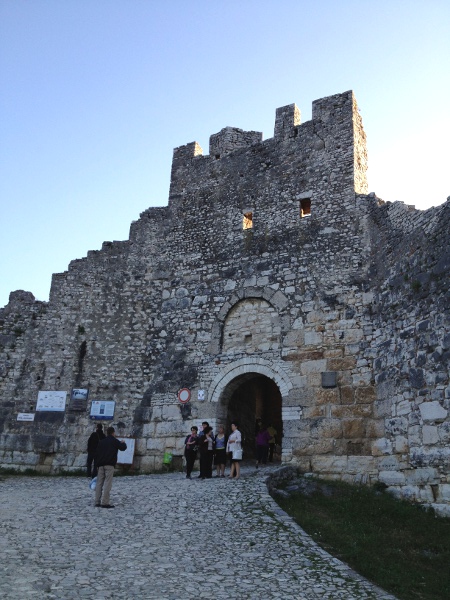
Berat, Albania – Berat, located in central Albania, is a rare example of a well-preserved Ottoman town and is known as the "Town of a thousand windows", due to the many large windows of the old decorated houses overlooking the town. In July 2008, the old town (Mangalem district) was inscribed on the UNESCO World Heritage List. While the Mangalem riverfront has traditionally been a bazaar area, the residences of merchants and artisans are situated on the steep slope above. The quarter is shaped like an elegant pyramid, on top of which is the castle. The main visual characteristic of this quarter is the number of windows on top of one another. While in Berat, visit the Mangalem district (UNESCO), the castle and churches inside and the Icons museum Onufri, which has the best collection of Albanian icons from the 13th to 19th century.

Saranda, Albania – Enroute to Saranda, we made a brief stop at the “Castle of Ali Pasha”, built by Ali Pasha Tepelena in the gulf of Porto Palermo at the beginning of the 19th century. The castle is situated on a scenic peninsula and has a distinctive triangle shape.

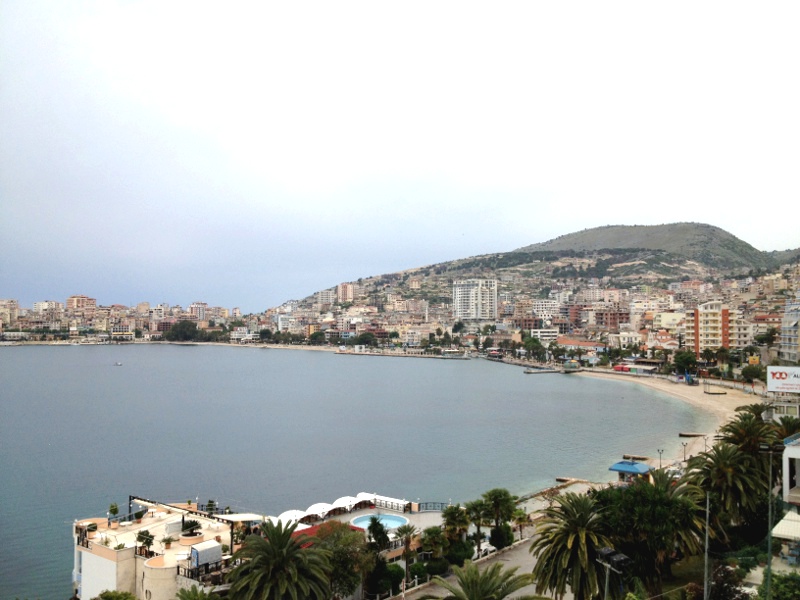
After arriving in Saranda, we visited the Butrint Archaeological site, located 18 km away from the city. The Butrint archaeological site and museum is a UNESCO World Heritage Site and RAMSAR wetlands protected site. Once inside, one can enjoy the peaceful surroundings, see the plentiful rosemary plants, smell the fragrance of the eucalyptus trees and hear the crickets chirp amidst the ruins.


Gjirokastra, Albania – Gjirokastra was declared a “Museum City” in 1961 and a UNESCO World Heritage Site in 2005. Initially, it was an Illyrian settlement linked to the Argjiro tribe. In 1417, the Turks conquered it and turned it into an important center of Ottoman power and administration for hundreds of years. Visitors will be impressed by the city’s architecture, the views from Drino Valley overlooking a historic landscape framed by snow-capped mountains, and the lime peaks of the Bureto and Lunxheri mountain chains. This city of a thousand steps comprises hundreds of Ottoman-style tower houses with distinctive stone roofs, wooden balconies and whitewashed stone walls. Situated very close to the Greek border, Gjirokastra has been the stage of many important events in the history of the country.


Ohrid, Macedonia – Leaving Albania, we now enter Macedonia. Our first stop is Ohrid, a city located on the eastern shore of Macedonia and is well known for its churches. With beautiful houses every step of the way, it is a natural tourist magnet. While there, we visited the Samoil Castle, Old Town, the Old Saint Clemente Church also known as Holy Mother of God Periblebtos, the Roman Theatre, the church of St John the Theologian-Kaneo and enjoyed a panoramic view from the Fortress of Czar Samuel. Due to the rain, we skipped the short boat trip in Ohrid lake. Fortunately, this was made up by a lovely lunch at a local restaurant by the shores of the lake.


Skopje,
Macedonia – Our last stop on the trip was Skopje and
dinner was the order of the day when we arrived, where we had a sumptuous meal
at a local restaurant. The restaurant, Old City House, is a rare example of
folk architecture of Skopje of the 19th century. Early next morning, we set out
to explore the sights of Skopje, with the help of our English speaking guide.
We visited the Alexander Fortress in Skopje known also as Kale, the Church of
Saint Savior known as Sveti Spas, the Old Town, the Memorial House of Mother
Theresa and the Old Skopje Train Station which was almost completely destroyed
by the earthquake. We also drove out to Vodno Mountain located 25 minutes from
Skopje. Once on the mountain, we made our way to visit the Church of Saint
Panteljemon and had lunch there as well. After a hearty lunch, it was time to
say our farewells to the Balkans as we drove back to Skopje to board our flight
home.


*The views
and opinions expressed in this article are that of the writer and do not
represent the views of New Shan
Travel.